Monday, March 30, 2015

Day 4: Time to Get Corporal!

The two highlights of this day were our visit to Peking University and our first company visit which was to COFCO, a state owned enterprise. Peking University is a very prestigious school in China. It is pretty much similar to their Harvard. Over ten million people take China’s college entrance exam, the Gao Kao, every year and Peking University only accepts around 2600 of them. I was able to get some nice photos of the campus before cold weather caused our walking tour to be cut short.

                                               
            Once inside, we listened to 2 PKU students talk about their senior design project. Their goal was to make a self-driving car and they collaborated with University of Toronto and University of California-Irvine. We then listened to a lecture from Professor Guo, PKU’s professor of modern Chinese History. He couldn’t English, so Ivy, one of our Asia Institute guides, translated for us. He gave a brief history of PKU from its founding in 1898 to the present. After the lecture, we were escorted to PKU’s dining hall and there were some similarities and differences I noticed between this dining hall and Market Central back at Pitt. Like Pitt, the dining hall had multiple food options and you can add as many items as you want to your plate, however, before you sit down, you have to swipe your ID and pay for the cost of the food, which is more like our Dining Dollar system. Also, while Pitt students tend to have an even distribution of when people eat at Market Central, PKU students and most other Chinese Universities have a central lunch hour (anywhere from 11am-1pm) when practically everyone eats, which explains how packed the PKU dining hall was so packed! We ended the visit at the school book store and I bought a couple of souvenirs. One thing I will say is that compared to Pitt, PKU’s security was extra tight. There were armed guards at the front gates of the school and only students, faculty and authorized visitors could enter. At Pitt, just about anyone can walk on our campus and the only places that have constant security are the security desks to the dorm rooms.

            We then travelled to COFCO, where a Pitt alum greeted us and showed us around. Like I said earlier, COFCO is a state-owned enterprise. They are also the biggest and most successful food processing and distributing company in China. We saw how they use technology such as facial analysis and analysis of eye movement when consumers look at their product in order to examine what the consumers want in a product. We also emphasized COFCO’s use of their entire industry chain strategy. They want to lead the journey from ‘field to fork’. They want to be in charge of food production and agriculture, food processing and testing and marketing. Now, the person in charge of operations in this building said that being an SOE means that they can be less urgent about business choices. I will talk about this later when we visit our first privately-owned company.

Day 3: A Celebrity In a City Built For Royalty

We started the day with a visited to the Forbidden City. The Forbidden City was where the Chinese royal family lived and it was forbidden to commoners, hence the name.  What occurred with the old man at the end of the Temple of Heaven visit happened a lot more here. One of the most entertaining things I noticed during the entire trip was how often the natives would run towards me to either take pictures of me behind my back or with me. I had at least 20 picture requests and probably more pictures were taken of me without me knowing. Ivy, one of our guides, told me that many Chinese people have never seen an African-American in person, and I was still young as well. So that kind of explains why I became a celebrity for a day. The Forbidden City itself had some more of the classic Chinese architecture I am a fan of, but what I really thought was beautiful was the garden and the Women’s quarters. There were really beautiful stone formations and plant life.


We then headed to the art district which was a shopping area with art galleries and sculptures mixed into the architecture. We had lunch and I took some pictures of the surroundings.
                                               

            We then went to the silk market. Here, many Chinese people who know really good English will try to sell you various items and there, you can bargain your price. The Chinese tend to treat business negotiation as a game of wits, so if you can outsmart them, you can save a lot of money. My defining moment at the silk market was saving 410 yuan ( about $70) on one of the infamous knockoff Chinese NFL jerseys. This one was a Roger Staubach (Dallas Cowboys Hall of Famer), so I really wanted it. We ended the day at the Red rose restaurant, which was a place inspired by Western Chinese culture which is a mixture of Chinese and Indian culture. We were treated to nice food, music and traditional dancing performances. I then went to bed and prepped for our first university visit and our first company visit.

Day 2: The Great Wall Is So High, It Reaches Heaven!

The day started with a bus trip to the Great Wall of China. We got there in about a half-an-hour, but that was just to the bottom of the summit. We did not pay for the ski lift to the top so we needed to climb 1200 steep steps in order to get to the wall. I am not the most in-shape person in the world so despite the weather being slightly chilly, I was sweaty and gasping for air along with half of the class when we got to the top. When we reached the wall, I noticed there were steep peaks and valleys in the walkway and when we encountered steps, they were steep and their angles and size were uneven.


It was a struggle, but we finally reached the summit of what was left of the wall and our group took a picture together after sharing some drinks. There was a surprise for us when we began to descend the wall. There was a toboggan slide that we could ride in order to get to the bottom of the summit. Because of my weight, I got stuck midway through the slide, but I was eventually able to pull my way down the slide and keep on going. When leaving the wall, I was in awe. The wall reminded me of how far back Chinese history goes and how it makes the length of our history seem miniscule. The Chinese started construction of this wall-with amazing architecture for the time- more than two thousand years ago. Our country’s first account of significant history came less than 400 years ago. Also, the Chinese soldiers that patrolled this wall must have been really in-shape. We visited a second important landmark called the Temple of Heaven. The significance of the Temple of Heaven is that the Emperor of China would go to the Temple in order to pray to their gods for a good harvest in the upcoming season. What really stood out to me was the architecture of the temple. It was very beautiful and it was a sharp contrast to the buildings in the inner city of Beijing.


We ended our visit with a 30 minute tai-chi lesson and I really enjoyed it. Tai-chi is very popular in Beijing and I saw many senior citizens practice it as a recreational activity. I also had my first experience with a native who desperately wanted my picture. He didn’t understand me, but when I showed that he could take a photo with me, the old man ran towards me as fast as he could with the most excited look on his face. We ended the night with a formal dinner in which we introduced ourselves in broken Chinese and we listened to a speech from a Beijing start-up company CEO who was a Pitt Alum. He talked about the ups and downs between working in the U.S. vs. working in China as well as building start-up companies in foreign places. The talk was helpful because foreign business ventures were a very common topic during our trip.

Day 1: Crazy Night in Beijing

The first day in China was mainly used to get adjusted to our surroundings After a 14-hour flight we finally arrived at the Beijing Airport, I went through customs and I withdrew 600 RMB (about $100) out of the ATM. Chinese currency is very interesting and they even have coins and paper bills that equal the same amount. After I took pictures of my yuan, we met with the Asia Institute who walked us to our charter buses. When I looked out the windows, I noticed a couple of things that I had expected.

The smog was immediately noticeable and I definitely could not get any good pictures because of it. Also, the traffic was terrible. It was almost bumper to bumper the entire time we were on the highway. It’s to being expected considering Beijing is one of the most crowded cities in the world. After we checked into the hotel, we got to know the international students accompanying us and our guides from the Asia Institute. We had two students from Israel and another from Japan. Our guides were named Ivy, Jody and Ariel. After we mingled for a little bit we went to a nearby mall to explore and get dinner. The way the Chinese eat dinner in restaurants is different from American dining. Instead of each person ordering their own entrĂ©e, in Chinese dining, multiple dishes are put on a spinning disk on the table and everybody spins the disk to their food of choice and adds it to their own plate.


Monday, February 23, 2015

Trenton Does China Entry 1: Before the Trip


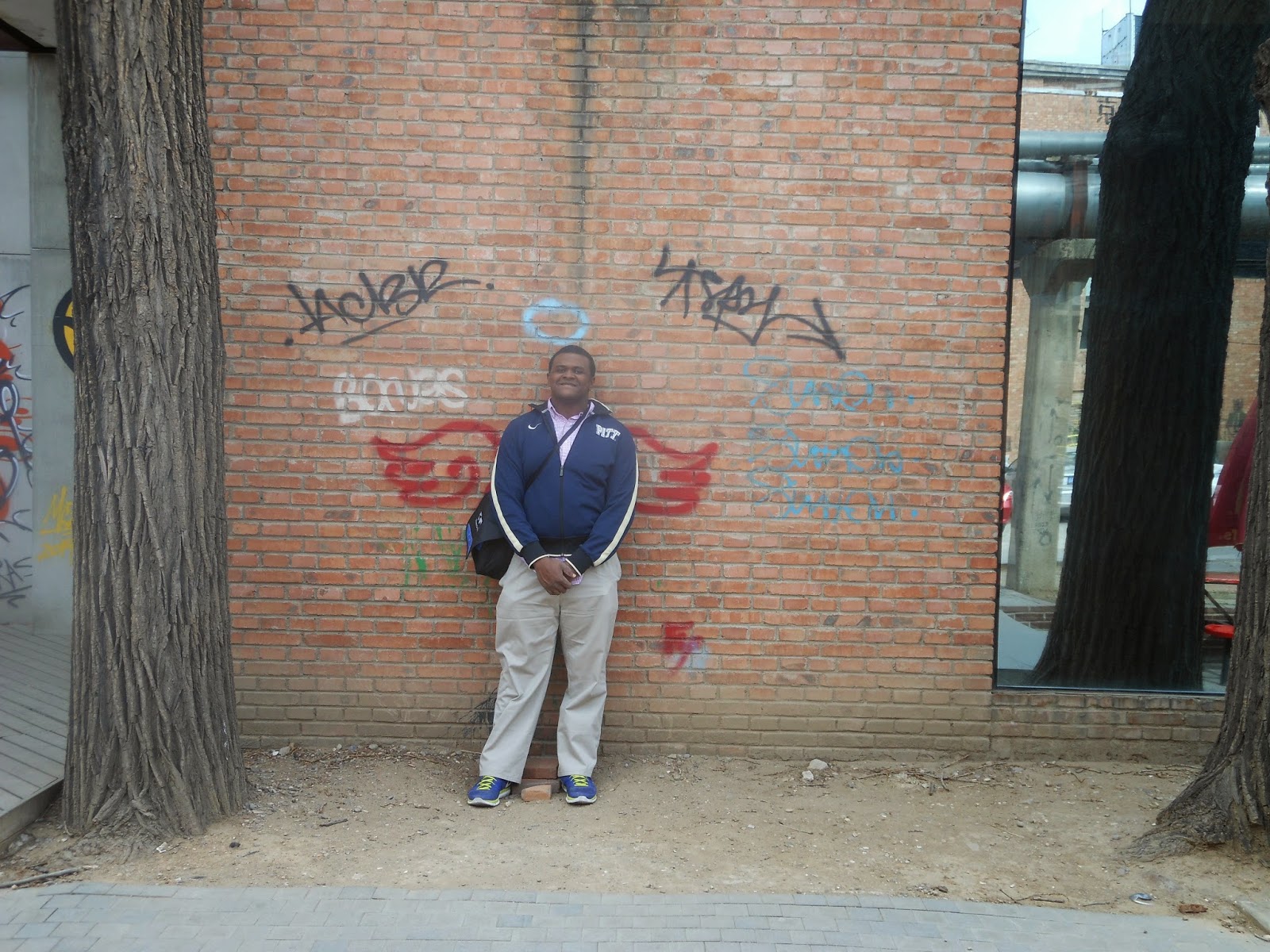
Hello everyone! My name is Trenton Gilstrap, a junior Bioengineering major at the University of Pittsburgh and that is me in the picture above. I have started this blog to get the word out about a program offered at the University of Pittsburgh called INNOVATE. The program accepts applications from business students and students of all engineering disciplines and forms a class out of them. The class will then meet once per week during the Spring Semester. The goal of the class is to teach students about Chinese culture, tradition, and how they handle business. The last component is the most important to this course. Turns out that how the Chinese attack issues in Industry is significantly different from the U.S. I will go more into the differences as I experience them in later postings.

Right as Spring Break begins, the INNOVATE class board a flight to China and stay there for break. While we are there we will split time between Beijing, Suzhou and Shanghai. At each stop we will be visiting different companies to see how Chinese companies handle industry and in particular how they attack the issue of sustainability.

I am very excited about the trip. It will be the first time I have ever been to Asia and it was a miracle that I found the money to attend the program. I have always been interested in Asian culture and before I never had the resources to travel abroad, let alone fly all the way out to Asia. So, INNOVATE seemed like a perfect option to me. I will talk about the ups and downs of the trips and talk about specific topics that interest me like the native cuisine, travel, landmarks and other things that catch my eye. I am about to do China and I am taking you, the reader, along for the ride.